Kochur Loti Recipe: A Chef’s Guide to Bengal’s Most Underrated Dish
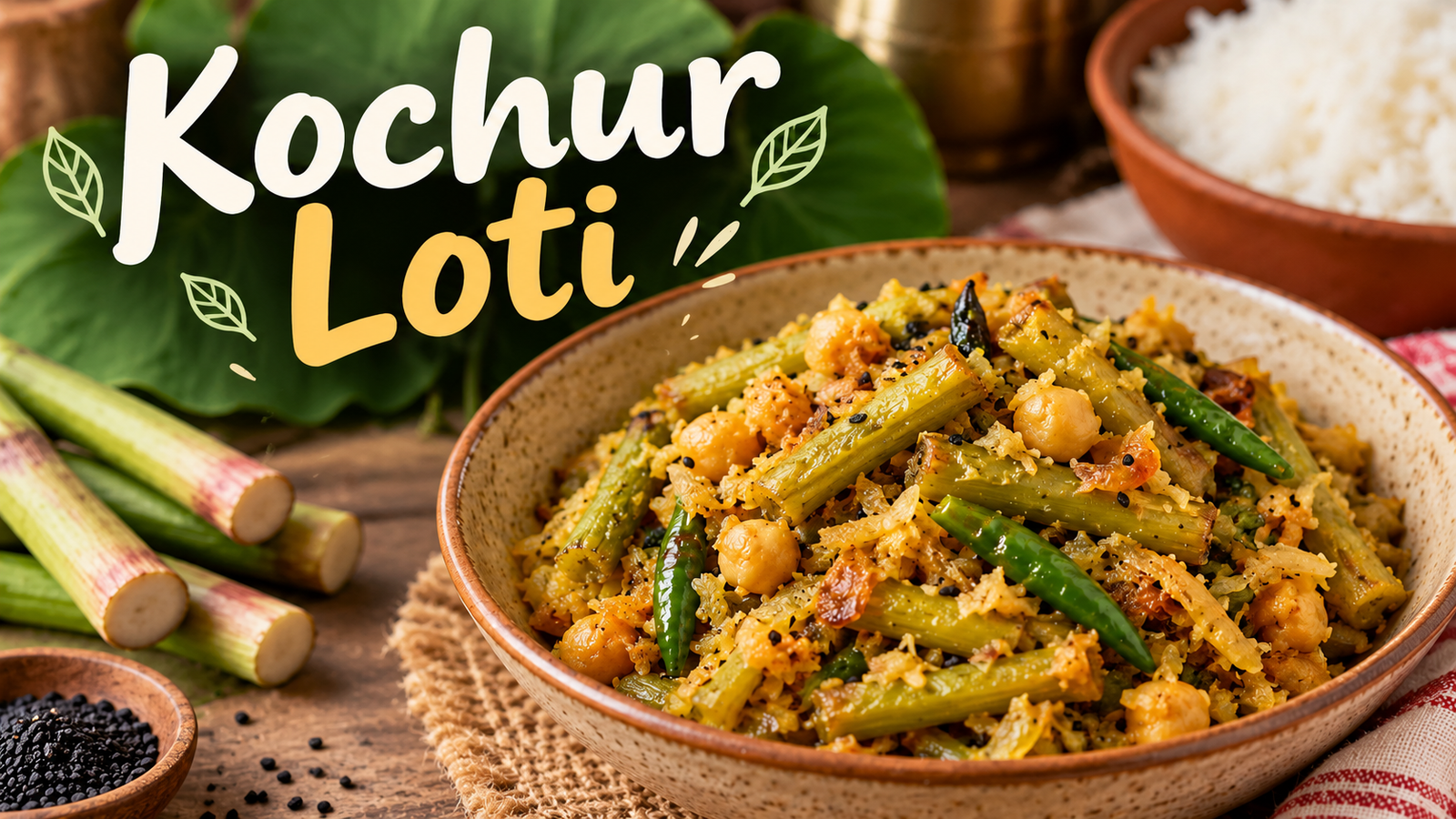
In my years in the kitchen, I’ve learned that the humblest ingredients often demand the most respect. Kochur Loti simply refers to the tender stems of the taro plant, cooked down into a classic Bengali dish. This kochur loti recipe—built around those stems—is a perfect example of a bengali vegetarian recipe. It looks unassuming on the chopping board, but handled correctly, it delivers a texture and depth of flavor that rivals far more celebrated vegetables. This is Bengal’s answer to nose-to-tail cooking, except here it’s root-to-stem: nothing goes to waste.
Kochur Loti has quietly held its place in Bengali kitchens for generations, and for good reason. It reflects a philosophy I respect deeply as a chef—seasonal, resourceful cooking that extracts maximum flavor from ingredients most people would discard. While the taro root and leaves get the spotlight, the stems are where the real technique lives.
When Do Bengalis Cook This Kochur Loti Recipe?
This is a warm-weather dish, tied closely to the humid months when taro stems are at their freshest and most tender. On a professional line, I’d call this seasonal cooking done right—you use it when it’s at its peak, not year-round out of convenience.
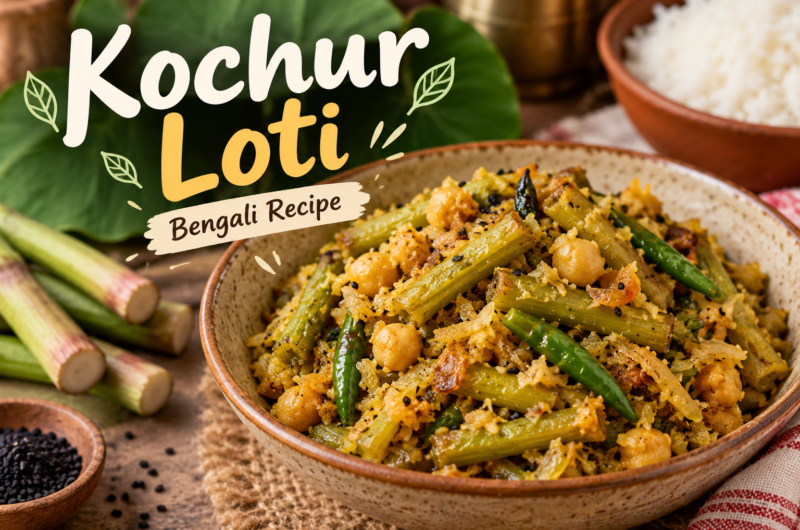
Traditionally, this kochur loti recipe shows up at the Bengali lunch table, plated simply alongside hot steamed rice. Regional and household variations abound: some cooks keep it lean with just mustard oil and a tight spice blend; others build it out with grated coconut, chickpeas, prawns, or fish. My personal preference leans toward the coconut-and-chickpea version—it’s vegetarian, but the textural contrast makes it feel far from restrained.
What makes this dish so special?
Texture is everything here. Get the technique right, and the stems turn tender while holding a slight resistance to the bite—what I’d call structural integrity on the plate. The flavor itself is subtly earthy, almost mineral, which makes it an excellent canvas for spice.
Here’s the technical part every home cook needs to respect: raw taro stems carry calcium oxalate crystals, which will irritate your mouth and throat if you skip proper prep. This is non-negotiable. If you’re wondering how to cook kochur loti safely and correctly, the answer lies entirely in the prep work—peeling, thorough washing, and a proper boil before the stems ever touch hot oil. Cut this corner, and you’ve ruined the dish before it starts.
Is Loti Healthy?
From a nutritional standpoint, taro stems are lean—low in calories, decent in fiber, with trace vitamins and minerals that support a balanced plate. Fiber does the digestive heavy lifting here, and it’s part of why this dish feels light despite its richness.
That said, I always tell people: the health value of any dish is only as good as its execution. Go easy on the oil, balance it with chickpeas and coconut, and you’ve got a genuinely wholesome plate. This isn’t a superfood you should be chasing for miracle benefits—it’s simply good, honest cooking that happens to be nutritious.
Kochur Loti Recipe
Course: Lunch, DinnerCuisine: BengaliDifficulty: Easy3
servings15
minutes20
minutes200
kcal35
minutesTender taro stems, cooked low and slow with mustard oil, panch phoron, and coconut—earthy, textured, and built on technique that’s been perfected over generations.
Ingredients
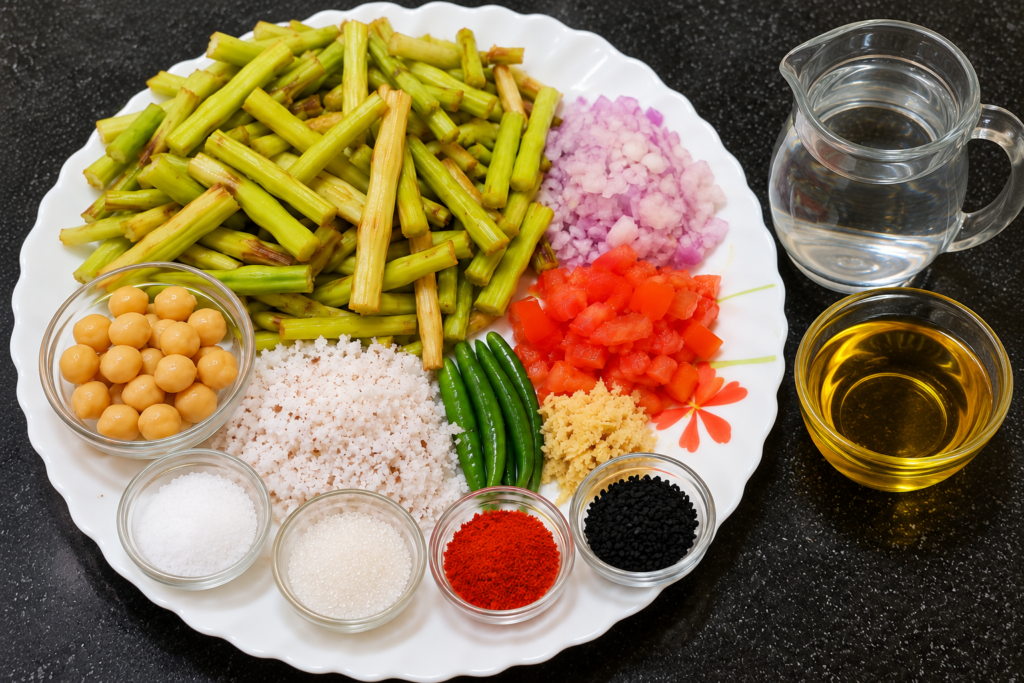
Kochur loti (taro stems) – 300 g
Oil – 4 tbsp
Kalonji (nigella seeds) – ½ tsp
Onion – 1, finely grated
Grated coconut – 2 tbsp
Boiled chickpeas – 2 tbsp
Turmeric powder – ½ tsp
Red chilli powder – 1 tsp
Green chillies – 2–3, slit
Salt – as per taste
Sugar – a little, optional
Water – as required
Directions
- Start with respect for your ingredient.
Wash the kochur loti thoroughly, then carefully peel away the outer fibrous layer—take your time with this, because proper cleaning is what gives you a smooth, pleasant bite. Cut the stems into neat pieces and give them one more good rinse. Clean preparation is the foundation of a good dish. - Blanch it right.
Bring a pot of water to a rolling boil, add the stems, and let them cook for about 5 minutes—just enough to soften them and make them ready for the next stage. Drain them completely; you don’t want excess water carried into the frying process. Set them aside. - Give the stems their first layer of flavor.
Heat 2 tbsp oil in a kadai until properly hot. Add the boiled kochur loti along with ½ tsp turmeric and a pinch of salt. Fry gently until the stems are lightly fried and nicely coated with the seasoning. This step adds the first layer of flavor and gives the loti a beautiful texture. Once done, take it out and keep it aside. - Bloom your spices.
In the same kadai, add the remaining 2 tbsp oil. Once the oil is hot and shimmering, add ½ tsp kalonji and let it splutter. That little tempering is the aromatic foundation of this dish. - Layer in sweetness and body.
Add the grated onion and sauté gently until it becomes soft and lightly golden. Then add 2 tbsp grated coconut and 2 tbsp boiled chickpeas. Stir everything together and let it cook for a minute or two, allowing the coconut, chickpeas and onion to come together into a rich, flavorful base. - Bring it all together.
Add the fried kochur loti back into the kadai. Sprinkle in 1 tsp red chilli powder and add slit green chillies according to your preferred level of heat. Mix everything gently but thoroughly, making sure the seasoning coats the stems evenly. - Let the flavors come together.
Add just a small splash of water, cover the kadai, and let everything simmer gently for about 2 minutes. This short cooking time allows the loti to absorb the flavors of the onion, coconut, chickpeas and spices without becoming overcooked. - Finish with confidence.
Remove the lid and give everything one final, gentle mix. The loti should be tender, flavorful and nicely coated with the masala. Turn off the heat once everything comes together. - A little touch of sweetness.
If you enjoy a subtle sweet note to balance the earthy flavors of the taro stems, add a tiny amount of sugar at the end and mix well. It’s completely optional, but that little hint of sweetness can add a lovely Bengali-style balance to the dish.
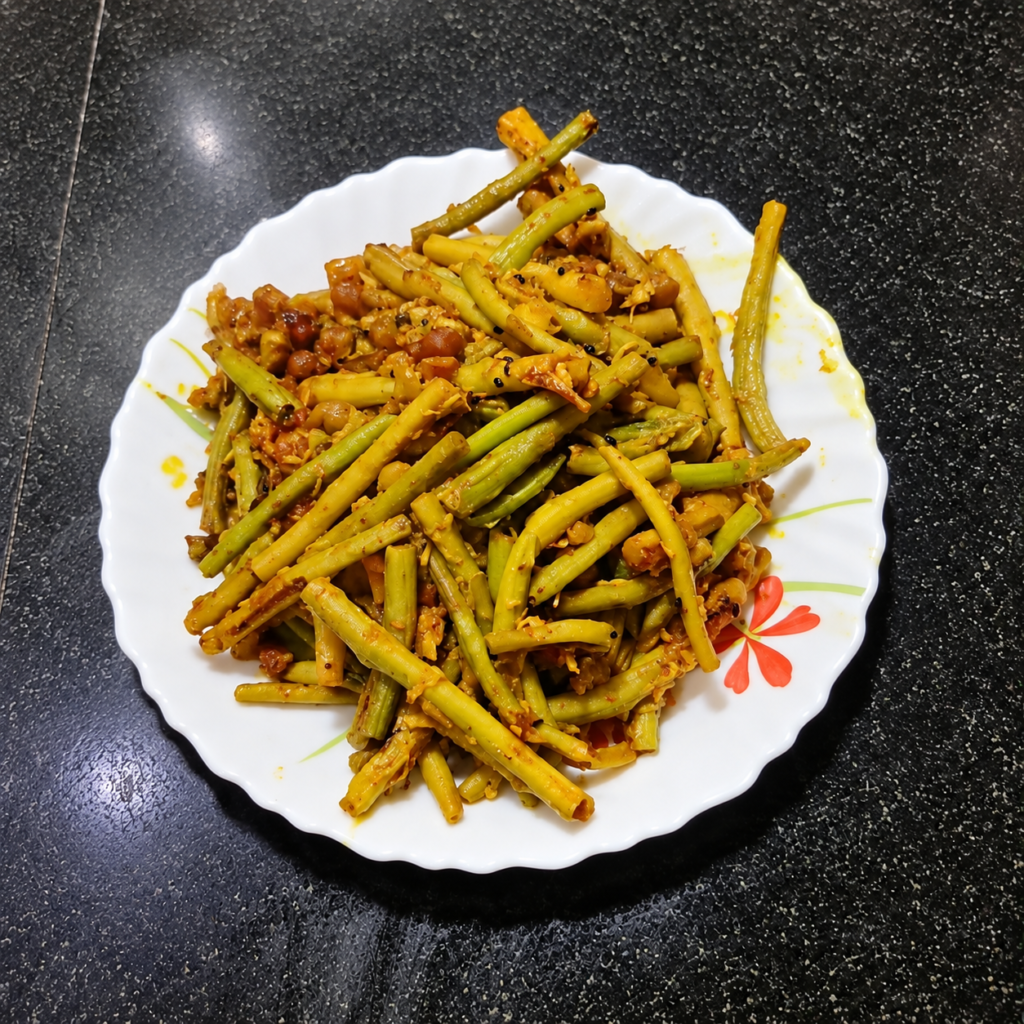
Serve it hot with steamed rice and enjoy this simple, comforting taste of Bengali home cooking.
Recipe Video
Notes
- Peel the outer fibrous layer thoroughly for a better texture.
- Boil the kochur loti for about 5 minutes before cooking.
- Drain completely to avoid excess moisture.
- Adjust green chillies and red chilli powder according to your spice preference.
- Add sugar only if you prefer a subtle sweet balance, and avoid overcooking the stems.
Frequently Asked Questions (FAQs)
1. What is Kochur Loti?
It is the tender stem of the taro plant and a beloved ingredient in traditional Bengali home cooking. It is often prepared with simple spices and enjoyed with hot steamed rice.
2. How can I prevent itching when preparing taro stems?
Peel off the outer fibrous layer, wash the stems thoroughly, and cook them properly before eating. They can contain calcium oxalate crystals that may cause itching or irritation if inadequately prepared.
3. Should I boil the stems before cooking?
Yes, for this recipe, boil them for about 5 minutes and drain well before adding them to the masala. The exact time may vary depending on their tenderness.
4. Can I skip the grated coconut?
Absolutely! The dish will still taste delicious without it. However, adding grated coconut gives it a subtle sweetness and a lovely texture.
5. What should I serve with Kochur Loti?
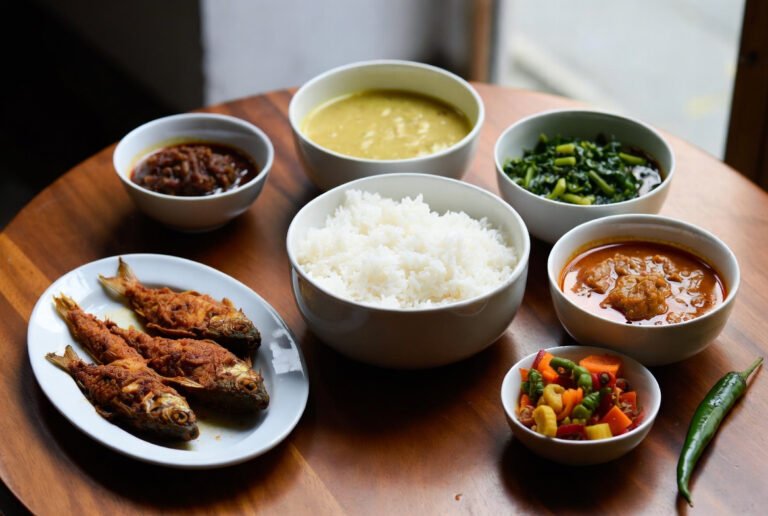
Hot steamed rice is a classic choice. You can also pair it with Bengali dal, other vegetable preparations, or fish curry for a comforting home-cooked meal.